

- 23369 Torre Cir
Boca Raton, Florida 33433 - +1 (561) 866-8787
- atelier@helenvalery.com
Luxury wedding florals begin with a clear design philosophy: flowers should do more than decorate a space; they should express the couple’s story and shape the emotional character of the celebration. A thoughtfully developed floral concept establishes continuity from the ceremony to the reception, guiding guests through an atmosphere that feels intentional, elegant, and deeply personal. Every arrangement, installation, and botanical detail contributes to the visual language of the day.
Creating that language starts with early conversations. The couple’s personal style, venue, season, color preferences, and desired mood provide essential direction, while inspiration images, fabric samples, invitations, and architectural references help clarify the aesthetic. A South Florida ballroom may invite refined arrangements with sculptural silhouettes and polished foliage, while a garden venue may call for abundant, romantic blooms that appear to have grown naturally within the landscape. The floral palette is then carefully selected to balance color, form, seasonality, and availability, ensuring that the final design feels cohesive rather than assembled from unrelated elements.
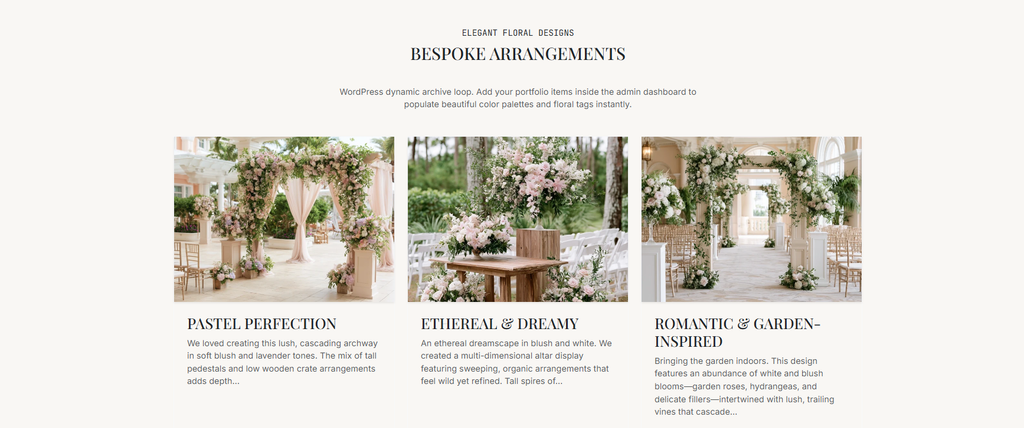
The distinction between arranging flowers and creating an immersive visual experience lies in the thoughtful use of scale, movement, texture, fragrance, and negative space. Tall installations can emphasize architectural height, low centerpieces can encourage conversation, and trailing blooms can introduce movement across tables or ceremony structures. Varied foliage, delicate petals, dramatic branches, and subtle scent create layers that guests experience from multiple perspectives. Negative space is equally important, allowing significant details to breathe and preventing abundance from becoming visual clutter.
Bespoke floral direction can take many forms, from soft, garden-inspired romance to crisp modern elegance, yet the strongest designs remain unmistakably connected to the couple. By considering the venue’s proportions, natural light, guest experience, and overall celebration style from the beginning, the floral team can create a unified environment rather than isolated arrangements. This considered approach transforms flowers into an enduring memory of the wedding day—one that feels beautiful, distinctive, and authentically theirs.
Floral architecture has the power to redefine a wedding venue, turning an already beautiful setting into an intentional, romantic, and luxurious environment. Rather than treating flowers as isolated centerpieces, designers use them to shape the way guests experience the entire property. A ceremony arch can frame the vows, while a floral meadow can soften a hard terrace or extend the impression of a garden across an open lawn. Suspended arrangements introduce dimension overhead, and carefully placed aisle borders guide attention toward the altar without obstructing movement.
The transformation can begin before guests reach the ceremony. Entrance statements establish the visual language of the celebration, while stairway designs connect separate levels with color, texture, and movement. At the reception, floral backdrops can define the head table or dance floor, and a dramatic focal installation can provide a memorable gathering point for photographs. Each element should relate to the next, creating visual continuity and making the venue feel like a light-filled garden sanctuary rather than a room containing disconnected arrangements.
Effective planning begins with a close evaluation of the venue’s existing architecture. Designers consider sightlines from guest seating, the height and character of ceilings, available natural light, landscaping, architectural transitions, and the movement of guests throughout the event. These details determine the appropriate scale, density, color balance, and placement of flowers. A low meadow may complement a broad horizon, whereas a suspended installation may be better suited to a tall ballroom with strong vertical lines.
Beauty must also be supported by careful logistics. Floral structures require secure engineering and may be subject to venue restrictions, load limits, or fire-safety requirements. Installation schedules must account for access, delivery, setup, breakdown, and the protection of finished surfaces. South Florida celebrations also require planning for heat, humidity, wind, rain, and changing outdoor conditions. Designers must preserve clear pathways, stable structures, and unobstructed emergency exits while protecting guests from falling materials or sharp supports.
When possible, floral elements can be designed for a thoughtful transition from ceremony to reception. An arch may be repositioned behind the head table, aisle flowers may be transferred to cocktail areas, and entrance arrangements may be reused as reception accents. This approach maximizes impact, reduces waste, and allows the floral story to evolve while remaining cohesive from the first arrival through the final celebration.
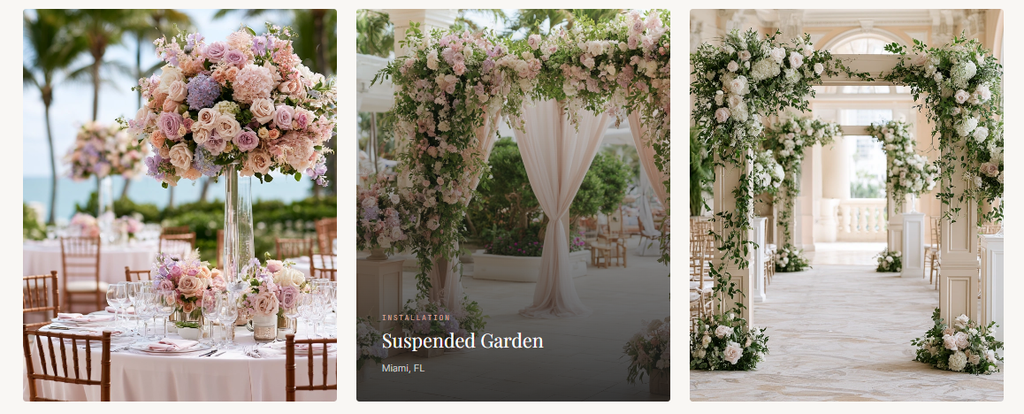
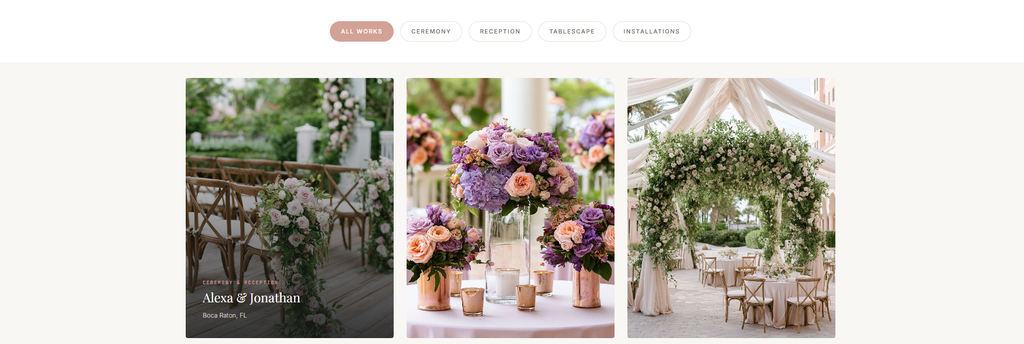
Tabletop styling gives the reception its most intimate expression. While ceremony flowers establish the overall visual language, the dining table brings that language within reach, allowing guests to experience its color, fragrance, and craftsmanship throughout the evening. Florals work in concert with linens, chargers, dinnerware, glassware, candles, menus, place cards, and personal details to form a layered tablescape rather than a collection of separate elements. A softly textured linen may temper polished metal chargers, while tinted glassware, hand-written stationery, and warm candlelight introduce depth and a sense of discovery.
Abundance must be balanced with comfort. Low garden-style arrangements can create a lush, gathered feeling while preserving clear sightlines across the table. Delicate bud vases offer an airy, romantic alternative, especially when distributed among votives and individual place settings. Sculptural centerpieces, floral compotes, and elevated designs provide height and drama when carefully proportioned, while floral runners can extend movement along a long banquet table. Each approach depends on scale: arrangements should feel generous without obstructing conversation, crowding plates, or limiting the practical space guests need to dine and interact.
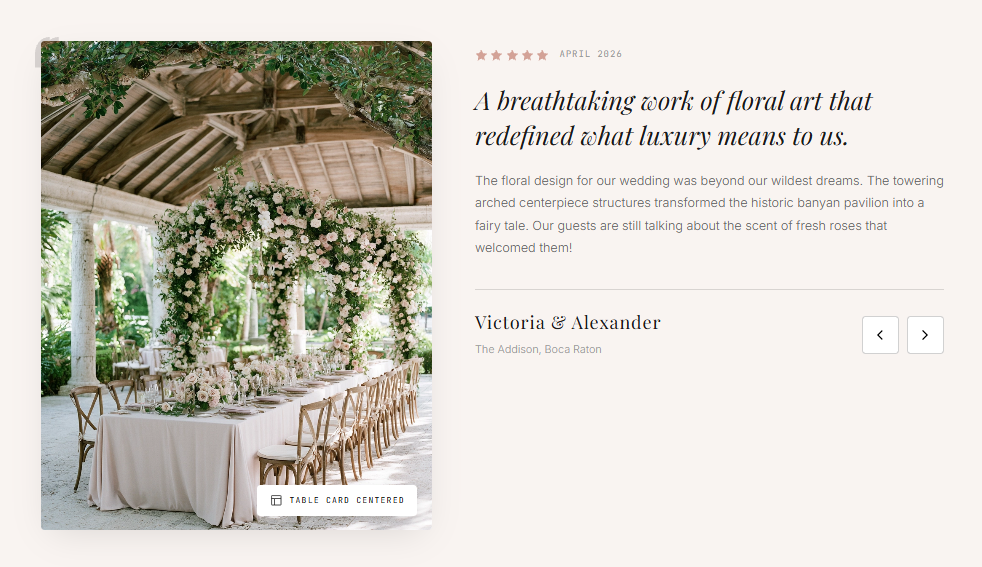
A considered tabletop installation may echo the ceremony arch, aisle flowers, or surrounding landscape while introducing subtle variations in texture, color, and shape. The same botanical family might appear in a softer palette, with feathery foliage replacing structured greenery or delicate blooms balancing more architectural flowers. Repetition creates cohesion; variation prevents the design from appearing mechanical. Thoughtful spacing, consistent vessels, measured candlelight, and precise placement reveal the value of skilled craftsmanship. Even sensory details, from the gentle scent of fresh stems to the glow reflected in crystal, contribute to a reception that feels bespoke, polished, and exceptionally considered.
Bringing an elaborate wedding floral concept to life requires far more than selecting beautiful blooms. The experience begins with an in-depth consultation in which the design team learns the couple’s story, aesthetic preferences, priorities, and vision for the celebration. Creative planning then translates those ideas into a cohesive floral language, supported by sketches, color studies, mood boards, floral recipes, and carefully considered budgets.
Local expertise is especially valuable across South Florida, where venues range from oceanfront resorts and historic estates to modern galleries, private homes, and tropical gardens. Designers must account for heat, humidity, coastal wind, salt air, seasonal availability, and the distinctive architectural character of each setting. These conditions influence flower selection, mechanics, transportation, timing, and placement. Premium flowers are sourced with attention to freshness, scale, texture, and durability, then conditioned and handled responsibly so they arrive ready to perform beautifully.
Production depends on precise scheduling and close collaboration. Floral teams coordinate with planners, venue managers, rental companies, lighting specialists, caterers, entertainment providers, and other creative partners to ensure that every installation supports the overall design. Detailed timelines identify delivery windows, access requirements, load-in procedures, photography moments, and strike plans. Contingency strategies also protect the experience against weather changes, transportation delays, substitutions, or unexpected venue restrictions.
On the wedding day, experienced professionals oversee installation and conduct rigorous quality checks. They refine arrangements on site, protect delicate details, adjust designs to the venue’s conditions, and remain available to address evolving needs. After the celebration, an organized breakdown preserves the venue, manages rentals and reusable materials, and completes the event responsibly.
This level of care reveals what luxury floral design truly represents. It is not simply an abundance of flowers or an impressive visual display. It is the thoughtful transformation of a couple’s chosen setting into a personal, emotionally resonant celebration—one whose atmosphere feels intentional in every detail and remains vivid in guests’ memories long after the wedding day.